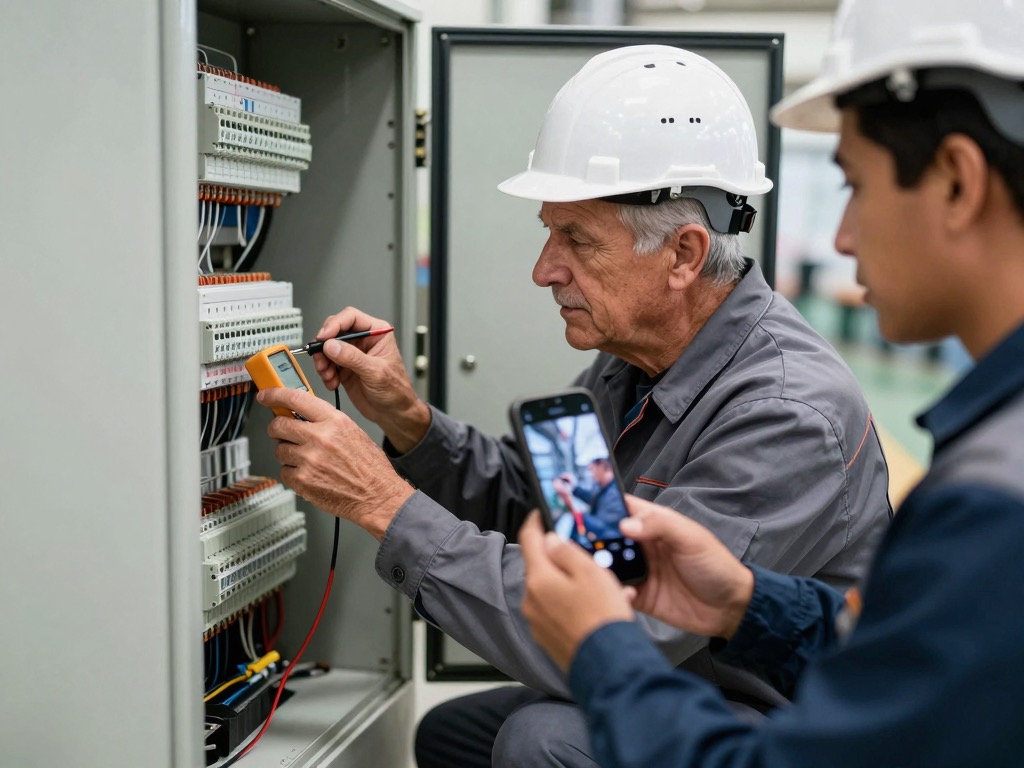
Hearing protection on, machine running, and the procedure buried in a binder nobody can find right now — so a rare job gets guessed. On the iPad at the workstation, an illustrated step-by-step guide is right there: each step shows the part and the tool, with the action arrowed and labeled, one step at a time, working even with no signal. So fewer parts get scrapped, fewer errors get made, and fewer accidents happen.
What the floor sounds like when the guidance isn’t at the machine:
A rare procedure gets guessed at the machine, and the wrong step is a scrapped part or an incident report.
The job aid at the machine and the training course say different things.
When a worker needs the step, the standard operating procedure (SOP) or the machine manual is buried in a binder nobody can find.
A new hire stalls at the equipment until someone senior walks over to walk them through it.
Nobody hunts for a procedure or pulls a senior off the line. A worker scans the QR on the equipment and an illustrated step-by-step guide opens on the iPad at the workstation — each step showing the part, the tool and the action, in their language, working even with no signal, and writing itself to the audit log on reconnect.
A worker walks up to the equipment, scans the QR code on it, and the tablet at the workstation opens straight to this machine’s procedure — no login, no searching, no binder. Gloves on, ear protection in, the next step is right there on screen: the part labeled, the action arrowed, big enough to read across the noise.
The illustrated guide at the machine and the video course can’t say different things, because they’re built from the same procedure. They just take different forms — a video course with chapters to learn it, an illustrated step-by-step guide to do it at the machine — and when the procedure changes, both update together, so the floor is never following a step the classroom retired.
A basement pump room, a steel-walled cell, a dead zone at the back of the plant — the SOP runs from the device with no connection at all. Every step a worker completes is captured locally and syncs to the audit log the moment the device reconnects, so the record builds itself without anyone writing anything down.
The same rare procedure, two very different moments at the equipment.
What guidance at the machine looks like across different teams:
A CNC operator scans a QR on the machine and follows the SOP, step by step, in his language.
A maintenance tech in a basement pump room with no signal runs an offline procedure that syncs to the audit log on reconnect.
A new hire on a packaging line ramps beside the equipment with no login and no senior pulled off the line.
An aerospace assembler follows a torque-sequence guide updated overnight after a spec change.
The procedure a worker needs is right at the equipment — a step-by-step procedure, in their language, working even with no signal. No binder to find, no senior to pull off the line, no guessing on the rare job. Just the right step, right there.
In-task guidance is the procedure at the moment of work — an illustrated, step-by-step guide. It’s built from the same source as the video course, stays current with it, shows in every language the floor needs, proves who ran each step, and lives on the same Learning Management System (LMS) the team already uses.
When the standard operating procedure changes, the in-task step updates with the course — the floor is current within a day.
Each operator follows the procedure in whatever language they trained in.
The same procedure they follow at the machine is the one they certified on.
The procedure runs on the workstation tablet even in a dead zone, then syncs.

Operators see illustrated setup and changeover steps at the line, so each machine runs right the first time.
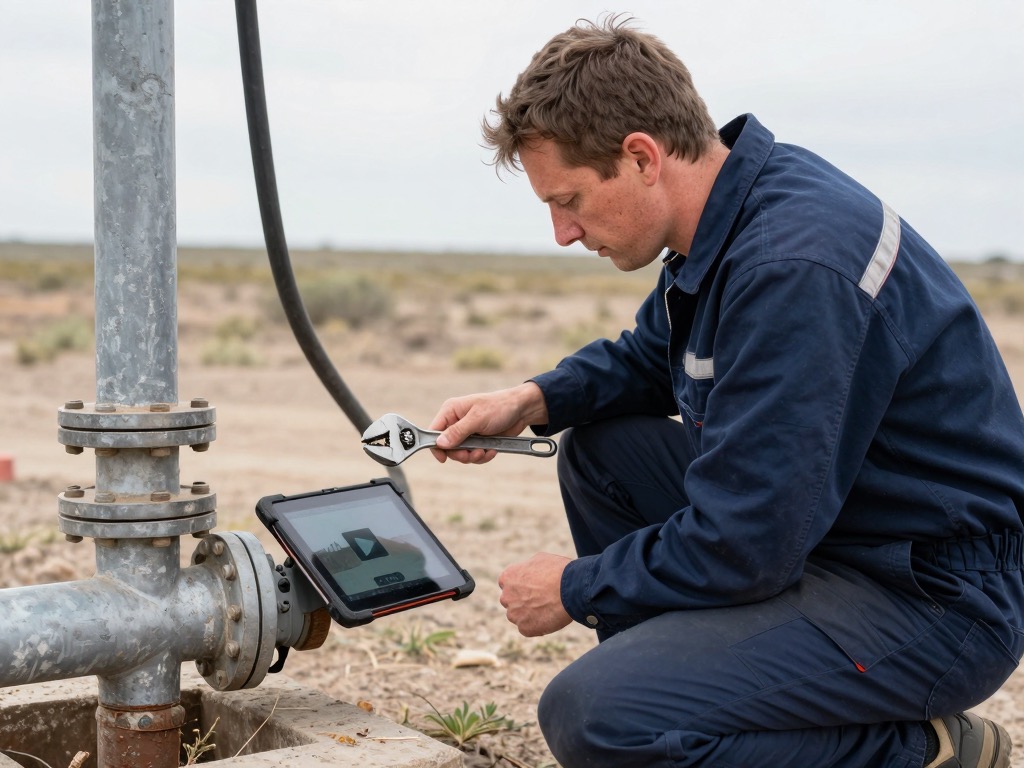
Technicians pull up the exact install or repair sequence on the unit in front of them, no callback needed.

Service techs follow illustrated procedures at the bay, hitting flat-rate times without skipping a torque or sensor step.

Line cooks follow illustrated prep and plating steps right at the station, so every ticket goes out built the same.
Pick one procedure where a wrong step scraps a part or files an incident. Give us twenty minutes and we’ll show you that procedure as an illustrated step-by-step guide at the machine — built from what your team trained on, working offline — live on the call.